
Through the past 12 months, the Bank Nifty has risen 55%

Container Corporation of India (Concor) has been the worst performer among major logistics & port stocks registering returns of about 4 per cent over the past three months as compared to 10-12 per cent for peers Gateway Distriparks and Adani Ports and SEZ. Uncertain outlook on the export-import (EXIM) trade front, market share loss, lack of progress on divestment, and weak June quarter results weighed on the stock. Volume and margin movement will be key triggers for the stock going ahead. As was the case in the previous quarter, margin performance was muted even in the June quarter. Operating profit in the quarter was down 17 per cent at Rs 391 crore missing estimates by over 15 per cent. Operating profit margins at 20.4 per cent, too, were down sharply by 350 basis points over the year-ago quarter.

The growth premium India enjoyed has largely been lost.

If financials and oil sectors were removed, India Inc has done quite well.

With a loan book of $268 billion, India's retail banking is now ahead of Russia, Malaysia and Mexico but behind China, Brazil and Thailand

Brokerages expect revenue growth at a 7-quarter high but profitability may disappoint.

Though Indian banks don't have large exposure to subprime mortgages, analysts are worried at the rise in their restructured loan portfolios and deterioration in credit quality.

Experts expect the trend to continue in the near term.

Second-tier NBFC stocks are trading at 24.4x their trailing earnings, which is nearly twice their 15-year average of 13.9x

BSE's, NSE's overnight liquid fund facility can help stock investors maximise returns

The fall came on the back of a massive selloff in NBFCs, led by DHFL which skidded over 50 per cent on fears of a liquidity crisis.

Firms have to adhere to strict compliance requirements mandated by global parents

A weaker rupee could aid corporate earnings through its positive impact on export intensive sectors such as information technology services, pharmaceuticals and commodity producers such as metal and mining, and oil and gas companies.

The markets gained nearly 7 per cent in the 4 trading sessions of March.

The retail inflation, which is factored in by the RBI to arrive at its monetary policy, has been on decline since last month. The previous low was 5.54 per cent in November 2019. The government has asked the RBI to restrict the inflation around 4 per cent, with a margin of 2 per cent on the either side.
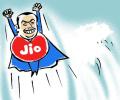
The incumbents Bharti Airtel and Vodafone Idea recorded adjusted gross revenue of Rs 10,701.5 crore and Rs 9,808.92 crore, respectively, during the quarter.
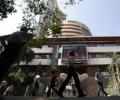
Analysts say traders have been building long positions on expectations the BJP would sail through in the five Assembly elections

Promoters' holding in private sector BSE 500 companies declined to 43.4% in Sept

Previous peak in 2010 crossed in first five-and-a-half months this year.

Build up inflation rate in the financial year so far was 2 per cent compared to a build up rate of 4.56 per cent in the corresponding period of the previous year. Inflation in food articles as a group rose to 11.08 per cent during the month as against 9.80 per cent in the previous month, mainly driven by exorbitantly high onion prices, the rates of which spiked by over 172 per cent from a year-ago. The annual rate of inflation, based on monthly wholesale price index was at 0.16 per cent in October.

Declining vegetable prices brought down the retail inflation to a 15-month low of 4.59 per cent in December and within the comfort zone of the Reserve Bank, government data showed on Tuesday. It is for the first time during the current fiscal that the Consumer Price Index (CPI) based inflation print is below 6 per cent or in the RBI's target range of 2 to 6 per cent. The central bank factors in the CPI-based inflation while arriving at its monetary policy. The inflation in December 2020 came down from 6.93 per cent in November, mainly on account of 10.41 per cent decline in vegetable prices over the year-ago period.

Wiping off nearly Rs 4 lakh crore of investors' wealth during the day, benchmark Sensex crashed on Friday.

Government-owned companies are more generous in rewarding their shareholders with dividends.

The BSE Mid-Cap index was currently up 0.83%. The BSE Small-Cap index was currently up 0.8%.

Strong macroeconomic headwinds causing turbulence in the $245-billion Indian IT industry are yet to calm down. Top Indian IT services companies are likely to post a decline or just marginal growth in sequential revenue in Q1FY24 because of a soft discretionary spending environment. Though the first quarter is seasonally strong for IT firms, "June 2023 will be an exception", according to analysts at Kotak Institutional Equities.

The sector is witnessing weak tendering.

The Hinduja Group, Mukesh Ambani, Murugappa, and the Adani groups were the other gainers in the Modi regime, while Naveen Jindal and Sun Pharma groups saw the most erosion in their m-cap in the last five years, reports Krishna Kant.

In five years, per-employee revenue for IT companies grew at 9 per cent each year.
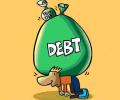
In the past three years, personal loans have grown at twice the rate of growth in personal disposable income, leading to a steady rise in household indebtedness. At the end of March this year, Indians owed Rs 25.2 lakh crore to banks and listed non-banking finance companies (NBFCs), up 65 per cent in the past three years.

Sensex rose 5.8% this year, against a 3.2% rise in Nifty; Axis Bank inclusion may blunt Sensex edge

Its rich valuation with a PE of 62 times raises downside risk for investors

67 companies with total debt of Rs 5.65 lakh cr were either loss-making or didn't generate enough profit to cover interest cost in FY15

Operational income not covering even their interest expenses, finds study; analysts say if economy turns around, new equity issuances an option

Indian Hotels, Tata Steel, Tata Teleservices, Tata Motors, Tata Power need some immediate attention of the Tata Group chairman
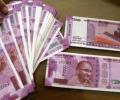
With India's imports exceeding exports, weak rupee does more harm than good. Analysts, however, say that rupee depriciation is positive for export-oriented sectors such as IT services, pharmaceuticals, textiles and automobiles
The index is more expensive than it was at 2014-end or when it hit a life-time high in January.

For non-banks, the IL&FS crisis was nothing short of India's Lehman moment, which has for a foreseeable future reset the sector on multiple grounds.

Analysts say strengthening bank's capital will boost earnings, bank needs chief with long stint to run show

While gold returned 12 per cent annual gain in 10 years, Nifty didn't exceed 9 per cent.

Most NBFCs will have to slow down their loan growth. Some of the most leveraged will have to sell a part of their assets (or loan book) to banks to raise incremental capital. Others may have to knock on the door of their deep-pocketed parents.
 © 2026 Rediff.com - Advertise with us - Disclaimer - Privacy Policy - Sitemap - Feedback - About us - Terms of use - Grievances